Hyvinkää Dismemberment Murder
Lords of ChaosThe Hyvinkää Dismemberment Murder was a killing committed by four young men from a Black Metal milieu against a friend who also belonged to that scene. The crime became one of the most disturbing cases associated with Black Metal in Finland, but the available account is not a complete judicial record: the book stresses that important details remained inaccessible, and distinguishes the prosecutor’s version from conclusions about motive or ritual. That uncertainty matters. The case was both a specific killing and a public story shaped by secrecy, prosecution, and sensational coverage.
Setting and Background
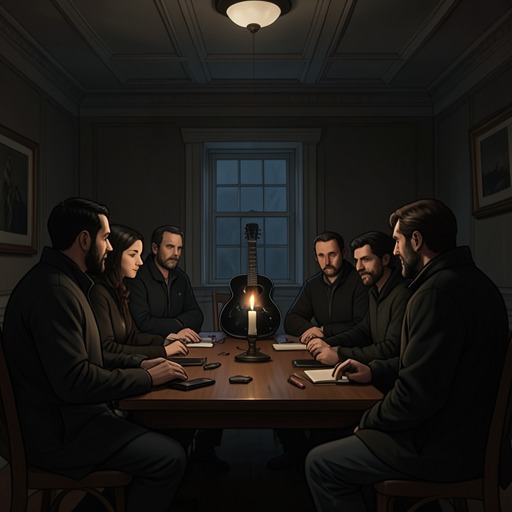
On November 21, 1998, five black-clad youths went to a mobile Christian teahouse. After an argument with the Christians, the group returned to an apartment in Hyvinkää where some of them lived. The building stood in a notably poor part of Torikatu Street, a neighborhood familiar to police through frequent calls about domestic disturbances. Locals sarcastically called the area Luotikuja, or “bullet alley.” At the apartment, the youths listened to Black Metal records and drank heavily. They were known for making Kilju, a potent homemade drink fermented from orange juice and yeast; the account describes it as a regular feature of their gatherings.
The book places the crime within a small, confused Finnish Black Metal scene, while drawing a distinction between Finland and Norway: in Finland, it says, crimes connected with the genre came from fans rather than prominent artists. That distinction does not make the scene a cause of the murder. The victim, like the four accused, was involved in Black Metal, and had played in the band Utuk Xul. He had an unsavory reputation among some scene members but was also reportedly admired by others, perhaps in part because he was older than younger participants.
The Killing and the Evidence
As the gathering continued, the group turned against the fifth member. The precise reasons were unclear in the public account. The District Attorney’s application for a summons described a progression of punishments and humiliations, followed by the victim’s death. The book cautions that this document represented the prosecutor’s case, not a complete or neutral account of all the evidence. It also notes that the apartment’s doors and walls carried sound readily, a circumstance relevant to the prosecution’s account of efforts to keep the victim quiet.
After the killing, the defendants allegedly mutilated the body and carried out acts they associated with Satanic worship. The District Attorney, Erkki Koivusilta, did not consider the murder itself a ritual; in his view, the group had imitated material encountered in books and horror films. The distinction separates the alleged actions from the meaning later attached to them: ritual language entered the case, but the prosecutor rejected the idea that the killing had been performed as a ritual. The youths then sawed the remains into pieces and left them in rubbish bins and dumps around the area.
On November 24, a severely mutilated human leg was found at a garbage dump. Further discoveries of body parts in other locations enabled authorities to identify the remains as those of a young Black Metal enthusiast and led the investigation to four of his closest friends. Some of the four had lived with him. The discovery turned a hidden crime within a small social circle into a police case, while also revealing the group’s attempt to conceal the victim’s identity and dispose of the remains across the neighborhood.
The Accused and the Case’s Limits
The account identifies 23-year-old Jarno Elg as the person most commonly regarded as the leader of the four. He was said to have considerable influence over his 17-year-old girlfriend and two male friends, aged 20 and 16. This description establishes a hierarchy within the group, but does not by itself explain why the victim was selected or how each accused participated. The book expressly says that the available public information was sketchy. It also reports that the court imposed a forty-year secrecy period on the proceedings, sharply limiting what could be established from outside the case.
At the time the book was written, the court case had not been fully resolved: some sentences, including a life sentence for the main defendant, were being appealed. The account therefore presents the prosecution’s description with an explicit qualification and does not treat every allegation as an uncontested finding. The police also told the media that the perpetrators had bragged about the crime to friends. Rumors reportedly spread through the small scene but remained there, in part because of fear of the killers and in part because participants observed a code of silence compared in the book to that of biker gangs or the Mafia.
Public Reaction and Significance
Finnish newspapers responded with headlines emphasizing ritual murder and Satanism. The book compares this reaction to Norway’s response more than five years earlier to crimes associated with its Black Metal scene. The parallel concerns the public framing of the cases, not an assertion that their circumstances were identical. In Hyvinkää, the combination of a youth subculture, an alleged leader, and the prosecution’s account of postmortem acts made the language of Satanic ritual especially prominent, even as the District Attorney disputed that interpretation of the murder itself.
The case thus exposes a tension between a local crime and the larger images through which it was reported. Black Metal connected the victim and accused to a shared subculture, but the evidence presented does not establish that music or a uniform belief caused the killing. Instead, the account keeps several levels in view: the group’s activity in a shabby apartment, the limited and contested public record, the concealment and discovery of the remains, and a press reaction that turned the event into a national emblem of Satanic excess. The unresolved details remain part of the story; they should not be filled in by the sensational narrative that surrounded the case.